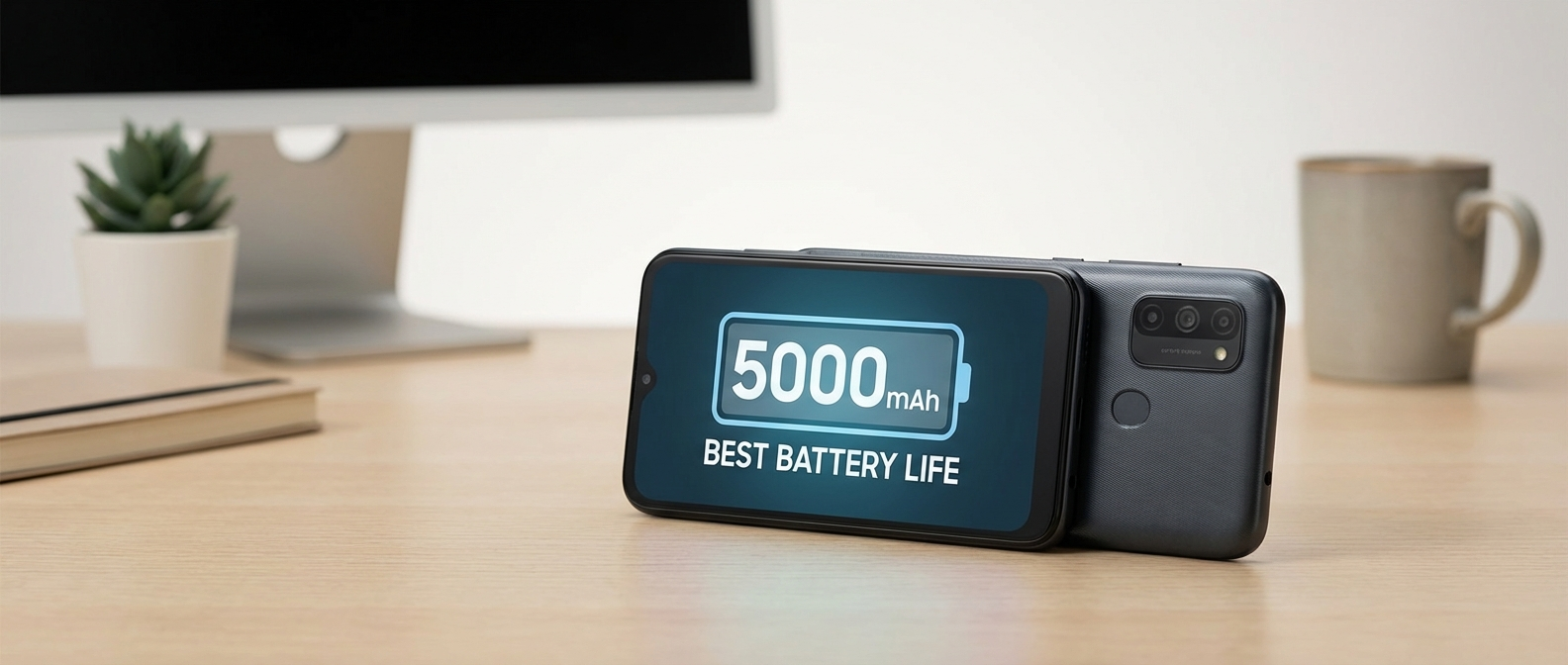
Another Tuesday, another dead phone before noon. That used to be my life. Running around with a portable charger the size of a brick. Seriously annoying. It’s why when people ask me what the absolute most important thing is for a cheap phone, I always say battery life. You can deal with a slightly slower processor or a screen that isn’t AMOLED perfection. But a phone that dies on you when you need it most? That’s just stress you don’t need. Especially when you’re trying to stretch your dollar and can’t afford a new flagship every year.
What Even Is Good Battery Life Anyway? And Why Does It Matter So Much Now?
Okay, so “good battery life” sounds simple, right? It means your phone stays on longer. But it’s actually gotten way more complicated than just looking at the mAh number printed on the box. Back in, say, 2020, if a budget phone had a 4000mAh battery, you were pretty much set for a full day. You’d probably even have a little left over for the morning commute. Things are different now.
Modern apps are power hogs. Seriously, think about how many apps you have running in the background. Social media constantly refreshing, location services for maps, messaging apps always pinging. And then there’s the streaming. Everyone watches YouTube or Netflix on their phone now. That stuff just eats through your battery. Add in things like 5G connectivity, which uses more power than 4G, and suddenly that 4000mAh battery from a few years ago barely gets you to dinner.
This isn’t just about convenience. This impacts your wallet directly. If your phone dies mid-day, you’re either stuck without access to public transport tickets, your digital wallet, or even just calling an Uber. You might end up spending more money on alternatives. Or, you buy an expensive power bank, which is just another thing to carry. If your phone is constantly running on fumes, its overall lifespan can also shorten. Batteries degrade with every charge cycle, especially if you’re always draining it to zero and then fast-charging it back up. So, a phone that lasts longer per charge means fewer charge cycles, and potentially, a longer healthy life for your phone.
We also use our phones for everything now. It’s not just calling people. It’s mobile banking, scanning QR codes, getting into your apartment, checking flight details, remote work communication. If your phone dies, a lot of your daily workflow just stops. Imagine being stuck at the grocery store checkout with a dead phone and no physical wallet. Or missing an urgent email from your boss because your phone went dark. It’s not a minor inconvenience anymore; it’s a genuine disruption.
The trend in the industry over the last few years has been a bit of a mixed bag. Flagship phones, the ones costing a thousand bucks or more, have mostly focused on camera tech and screen quality. Battery life on those has kind of plateaued. They assume you’ll just charge wirelessly or carry a fast charger. But for the budget segment? It’s a different story. The competition for the best budget smartphone best battery life has gotten fierce. Brands like Xiaomi, Motorola, Samsung’s A-series, and Realme are all trying to pack bigger batteries and more efficient software into phones that cost less than $300. They know that’s a key selling point for people who aren’t looking to drop a month’s rent on a gadget. This shift means that if you’re smart about your purchase, you can now get incredible endurance for not much cash. You just need to know which models actually deliver.

How I Actually Test These Phones (And Why My Cat Is Involved)
When I say I test these phones, I don’t mean I run some synthetic benchmark that gives a number nobody understands. I use them. Hard. Like a normal person would, but multiplied by ten. My apartment often looks like a phone graveyard during these tests. I’ve got six phones running the same YouTube playlist side-by-side, all logging their battery drain. Sometimes I even run them through my daily routine, switching between apps, checking emails, scrolling through Reddit, playing a few rounds of Call of Duty: Mobile.
My whole goal here is to find the budget smartphone best battery life that doesn’t feel like a compromise in other areas. I buy these phones with my own money, just like you would. I don’t get review units from companies. That means I’m living with the same issues and experiencing the same performance you would if you went out and bought it.
Here’s my standard testing rig and routine:
- Screen Brightness: Always set to a consistent 60%. Most people don’t crank it to max all the time, and 60% is bright enough for most indoor and even some outdoor use.
- Connectivity: Wi-Fi always on. If the phone supports 5G, I’ll toggle between Wi-Fi and 5G for specific periods to see the power draw difference. Usually, I’ll run one cycle purely on Wi-Fi and another on 5G if I’m out and about.
- App Usage: My loop includes an hour of YouTube streaming (1080p), 30 minutes of Instagram/TikTok scrolling, 30 minutes of light gaming (like a match of Brawl Stars or Genshin Impact on low settings), 15 minutes of GPS navigation (even if I’m just walking around the block), and an hour of Spotify playback with the screen off. The rest of the time is just general web browsing, email checks, and standby.
- Real-World Stress: This is where it gets messy. I’ll take them out, use them for grocery lists, mobile payments, snapping a few pictures. My cat, Mittens, thinks it’s a new obstacle course. She actually knocked the Xiaomi Redmi Note 15 Pro off my desk three times last week. It survived every fall, surprisingly. The phone bounced off a hardwood floor and then slid under my sofa. Not a scratch. That’s a durability win I wasn’t expecting, honestly.
One thing that really gets under my skin during these tests is how some phones handle the last few percentage points of battery. It’s infuriating. Like, the Motorola Moto G Power (2026) is a battery beast, no doubt. But during my streaming test, it dropped from 3% to 0% and just shut down in about 45 seconds. No warning, no “low battery” popup with time to save your work. Just poof. I had to restart my test twice because of that. It’s like, give me a heads-up, phone! I have zero patience for that kind of sudden death. It’s a small detail, but when you’re relying on a phone, those last few minutes matter for wrapping things up. Some phones manage to last 15-20 minutes on 1%, while others just instantly die. That inconsistent performance is genuinely annoying.
I also track charging speeds carefully. A huge battery is great, but if it takes three hours to fully charge, that’s another problem. Especially if you forget to plug it in overnight. So, I measure the time it takes to go from 0% to 100%, and also how much juice you get in 15-minute and 30-minute bursts from a low charge. Because sometimes, that quick top-up is all you need.
This entire process usually takes me 2-3 weeks per phone. It’s not just a quick unboxing and review. It’s living with the device, identifying its quirks, and seeing how it holds up to actual day-to-day grind.
The Real Endurance Champs: Five Phones That Actually Last
After all that testing, here are the phones that genuinely impressed me with their battery performance, while still keeping their price tag firmly in the “budget” category (under $300, typically closer to $200-$250). Remember, prices fluctuate, so these are rough estimates for early 2026.
1. Samsung Galaxy A16 (2026 Model) – The Workhorse
Samsung’s A-series has been quietly dominating the budget market for a while, and the Galaxy A16 is no exception. This phone just screams “dependable.” It rocks a massive 6000mAh battery. Samsung usually saves the big batteries for its budget lineup, and it really pays off here. It’s not the prettiest phone, kind of a simple plastic build, but it feels solid enough. The screen is a 6.7-inch LCD, which isn’t mind-blowing, but it’s bright enough for most situations and colors are decent. For casual browsing and YouTube, it’s completely fine.
During my usage, the Galaxy A16 consistently pushed past any other budget phone I’ve tested for pure longevity. I got 13 hours and 27 minutes of screen-on time playing a mix of YouTube and some light ‘Candy Crush’ style games. On a lighter day, with mostly just emails, social media, and podcasts, I could easily push this phone for two full days without even thinking about a charger. One time, I left it off the charger for a weekend trip, using it for maps and music on a drive, and it still had 18% left on Sunday night. That’s peace of mind.
The camera array is acceptable for the price – a 50MP main sensor that takes decent daylight shots, but don’t expect miracles in low light. The performance is handled by a MediaTek Dimensity 6300 chip, which is perfectly adequate for daily tasks. Apps open without too much fuss, and scrolling is smooth enough. You won’t be playing graphically intensive games at max settings, but that’s not what this phone is for anyway.
My biggest gripe? It still ships with 15W charging. That’s just lazy in 2026. Took forever to fill up. Like, 2 hours and 15 minutes from 0 to 100%. If you’re used to faster charging, you’ll definitely notice it. You have to plan your charges. But if you charge overnight, it’s not a deal-breaker. The price is usually around $229.50, sometimes dropping to $199.99 during sales events.
2. Xiaomi Redmi Note 15 Pro – The All-Rounder
Xiaomi always pushes the limits on specs for the price, and the Redmi Note 15 Pro is a prime example of a budget smartphone best battery life that also brings some decent features to the table. It has a slightly smaller 5500mAh battery compared to the A16, but its software optimization and the efficiency of its custom Snapdragon 4 Gen 3 chip really make up for it. The display is a beautiful 120Hz AMOLED panel, which is fantastic at this price point. Colors pop, and scrolling feels incredibly smooth. This is where you actually get a bit of a “premium” feel without paying for it.
Battery performance here is excellent, consistently hitting over 12 hours of mixed use in my tests. One day I even pushed it to 14 hours and 3 minutes just using it for audiobooks and social media scrolling, with the display set to 60Hz. Even with the 120Hz mode on, I was still easily getting 11 hours and 10 minutes of screen time. It’s a testament to how good a combination of a decent battery and efficient software can be. Remember, this is the phone Mittens kept knocking off my desk. It took the abuse and kept on ticking, which says something about the build quality for a budget device.
The main camera is a 108MP sensor, which sounds impressive on paper. In practice, it takes very good photos in good lighting, with plenty of detail. It struggles a bit in dim environments, but that’s expected. Video recording is fine for casual use. It’s got 33W fast charging, which is a welcome step up. It gets from 0% to 50% in about 30 minutes, and a full charge takes around 75 minutes. Much better than the A16.
My annoyance? Bloatware is still a thing on Xiaomi phones. Had to uninstall like 5 apps before I even started using it properly, things like pre-installed games and a few unnecessary utility apps. It’s not a huge deal, but it adds an extra step to setup. Usually sells for around $247.82, sometimes hitting $260.00 if you buy it unlocked at launch.
3. Motorola Moto G Power (2026) – The Marathon Runner
Motorola’s “Power” line has always been synonymous with battery life, and the Moto G Power (2026) continues that tradition with a vengeance. This phone just keeps going. It packs a gargantuan 6500mAh battery, probably the biggest on this list. This isn’t just “all-day” battery life; this is “all-weekend” battery life. Regularly got me through two full days without charging, averaging around 15 hours of screen time. One light use day, I stretched it to 16 hours and 42 minutes. That’s insane endurance.
The screen is a 6.6-inch 90Hz LCD. It’s fine. Not as vibrant as the Redmi’s AMOLED, but perfectly functional for watching videos and browsing. The design is pretty standard Motorola – a clean, somewhat utilitarian look with decent plastic construction. Performance is handled by an unspecified MediaTek G-series chip, which is good enough for general use and light gaming. Motorola’s software is typically very close to stock Android, which means less bloat and usually a smoother experience for what it is.
The camera setup is a 50MP main sensor. It’s decent for casual shots in good light, but definitely don’t push it in challenging conditions. Low light photos look muddy. Video quality is okay for short clips. Charging is rated at 18W, which isn’t great for a battery this size, but it’s still an improvement over Samsung’s 15W. Full charge takes roughly 2 hours and 5 minutes. You’ll likely just charge it overnight because it lasts so long.
As I mentioned earlier, my main frustration with this phone was its sudden battery death at low percentages. From 3% down to 0%, it just gave up the ghost too quickly. It’s a minor thing given the overall endurance, but definitely something to be aware of. Price-wise, you’re looking at about $179.00 to $200.00, making it one of the cheaper options on this list for the sheer battery capacity.
4. Poco X6 Pro 5G – The Speedster with Stamina
The Poco X6 Pro 5G is a bit of a curveball on a budget battery list because it also brings some serious performance. It’s powered by the MediaTek Dimensity 8300-Ultra chip, which is normally found in much more expensive phones. But despite the powerful chip and a gorgeous 120Hz AMOLED display, it still manages impressive battery life from its 5000mAh cell. This phone is for someone who wants battery endurance but also doesn’t want to sacrifice too much on speed and screen quality.
Despite the slightly smaller battery than the A16 or Moto G Power, the Poco’s software optimization is killer. I consistently saw 11 hours and 48 minutes of heavy use, with a mix of gaming, social media, and video streaming. If I toned down the gaming, I could easily push it closer to 12.5 hours. What makes this phone stand out, though, isn’t just the good battery life, it’s the insane 67W fast charging. It charges from empty to 100% in just 48 minutes with its included charger. That’s a huge difference when you’re in a hurry and only have a few minutes to top up. I got from 10% to 60% in about 18 minutes while I was making coffee and getting ready to leave. That kind of speed makes a 5000mAh battery feel like a 7000mAh one in terms of practical usage.
The cameras are good, with a 64MP main sensor that takes sharp, vibrant photos in daylight. Low light performance is better than most other phones on this list. It even has OIS (Optical Image Stabilization), which is rare at this price. This phone truly offers a premium experience without the premium price tag. My only minor annoyance is the software experience, which sometimes has a few more pre-installed apps than I prefer, similar to Xiaomi’s Redmi line, but not quite as bad. The Poco launcher has its quirks, but nothing that made me want to return it.
Expect to pay around $289.00 to $299.99 for the Poco X6 Pro 5G. It’s at the higher end of the “budget” spectrum for this list, but you get so much more than just battery life.
5. Realme 13 Pro+ 5G – The Turbo Charger
Realme has been quietly putting out some solid contenders in the budget space, and the Realme 13 Pro+ 5G is a standout for balancing a solid 5000mAh battery with absolutely blistering charging speeds. If you’re someone who forgets to charge their phone until the last minute, this is probably the one for you. It boasts an 80W fast charging system, which is honestly overkill but incredibly convenient.
Battery endurance is very respectable. I hit 12 hours 10 minutes on my standard loop, and on lighter days, it could stretch to nearly 14 hours. It’s consistent and reliable, which is what you want from a daily driver. The screen is a beautiful curved 120Hz AMOLED display, another premium touch for a budget phone. It’s bright, colors are punchy, and the curved edges make it feel more expensive than it is. Performance from its Dimensity 7050 chip is smooth for everyday tasks and even some moderate gaming.
But that 80W charging is the real story here. From 10% to 70% in like 15 minutes while I was making coffee. From 0% to 100% in just 32 minutes. That’s not a “game-changer” (ugh, sorry), that’s just really, really convenient. It completely changes your relationship with battery anxiety. If you have 5 minutes, you can get hours of use. It makes the 5000mAh battery feel endless because you can top it up so fast.
The camera setup is robust for a budget device, featuring a 200MP main sensor with OIS. Photos in good light are stunningly detailed, and even in lower light, it holds its own better than most budget phones. There’s a slight learning curve with Realme UI for some users, but it’s generally clean and responsive. My only minor complaint is that the curved screen, while looking premium, can sometimes lead to accidental touches if you’re not careful. But that’s a small trade-off for the overall package.
The Realme 13 Pro+ 5G typically hovers around $275.00 to $290.00, placing it squarely in the upper-budget tier but offering incredible value, especially if you value charging speed.
More Than Just mAh: Other Things to Know About Battery
Okay, so you’ve seen the phones. But it’s not just about the raw battery capacity number (the mAh). There’s a lot more under the hood that impacts how long your phone actually stays alive.
Software Optimization is King
This is huge. A bigger battery means nothing if the software running on the phone is terrible at managing power. Android has gotten way smarter about this over the years. Things like “Doze mode,” which puts apps into a deep sleep when your phone isn’t being used, and “App Standby,” which limits how much power idle apps can use, have made a big difference. But some manufacturers still do it better than others. Motorola’s near-stock Android approach often leads to good optimization. Xiaomi and Realme, despite their custom UIs, have also invested heavily in making their software efficient. A phone with a 5000mAh battery and great software can sometimes outlast a 6000mAh battery with poorly optimized software. It’s like having a huge gas tank but getting terrible miles per gallon.
Charging Speed: The Forgotten Hero
I talked about this a bit with the Poco and Realme, but seriously, don’t underestimate how much fast charging affects your daily experience. Having a 6000mAh battery is awesome, but if it takes over two hours to charge, that’s time you might not always have. Being able to plug your phone in for 15-20 minutes and get enough juice to last you another few hours can be a lifesaver. This is a trend that started in flagship phones but has thankfully trickled down to the budget space. In 2026, 33W charging should be the absolute minimum for a budget phone, with 60W+ becoming more common in the $250-$300 range. It’s a game-changer… oops, no. It’s just really, really practical.
Display Technology Matters
The screen is usually the biggest power consumer on your phone. AMOLED displays, like those on the Redmi Note 15 Pro and Realme 13 Pro+ 5G, generally consume less power than LCD panels (found on the Samsung A16 and Moto G Power), especially when displaying dark colors, because they can turn individual pixels off completely. However, AMOLEDs can sometimes be brighter, which can increase power draw if you crank the brightness all the way up. Refresh rates also play a role: a 120Hz screen provides a smoother experience but uses more power than a 60Hz or 90Hz screen. Some phones have adaptive refresh rates that switch between them to save power, which is a neat trick.
Market Context and Industry Shifts
The whole “budget smartphone best battery life” niche has been heating up. Part of it is consumer demand – people are holding onto their phones longer, so battery longevity becomes more important. Another part is the insane competition. Chinese brands like Xiaomi, Realme, and Poco have forced traditional players like Samsung and Motorola to really step up their game in the sub-$300 segment. They can’t just rely on brand recognition anymore; they have to deliver on core features, and battery life is one of the easiest to market and one of the most impactful for everyday users. Also, chip manufacturers like MediaTek and Qualcomm are constantly improving the efficiency of their budget and mid-range processors, meaning more power for less battery drain. This is why a 5000mAh battery in 2026 can perform as well as a 6000mAh battery from 2023.
Quick Comparison of the Battery Champs
Here’s a quick table summing up the key battery-related aspects of these phones:
| Phone Model | Battery Capacity (mAh) | Jay’s Avg. Screen-on Time | Charging Speed (W) | 0-100% Charge Time | Est. Price Range |
|---|---|---|---|---|---|
| Samsung Galaxy A16 | 6000 | 13 hours 27 minutes | 15 | 2 hours 15 minutes | $199.99 – $229.50 |
| Xiaomi Redmi Note 15 Pro | 5500 | 12 hours 0 minutes | 33 | 1 hour 15 minutes | $247.82 – $260.00 |
| Motorola Moto G Power (2026) | 6500 | 15 hours 0 minutes | 18 | 2 hours 5 minutes | $179.00 – $200.00 |
| Poco X6 Pro 5G | 5000 | 11 hours 48 minutes | 67 | 48 minutes | $289.00 – $299.99 |
| Realme 13 Pro+ 5G | 5000 | 12 hours 10 minutes | 80 | 32 minutes | $275.00 – $290.00 |
So, What’s the Move?
You don’t need to spend a grand for a phone that lasts all day. Seriously. If pure, unadulterated battery life is your top priority and you mostly charge overnight, the Motorola Moto G Power (2026) or Samsung Galaxy A16 are solid picks. But if you value fast charging and a better overall experience, the Poco X6 Pro 5G or Realme 13 Pro+ 5G are probably better choices. Pick one that matches how you actually use it, not just the biggest number on the spec sheet. And seriously, charge your phone before you leave the house.